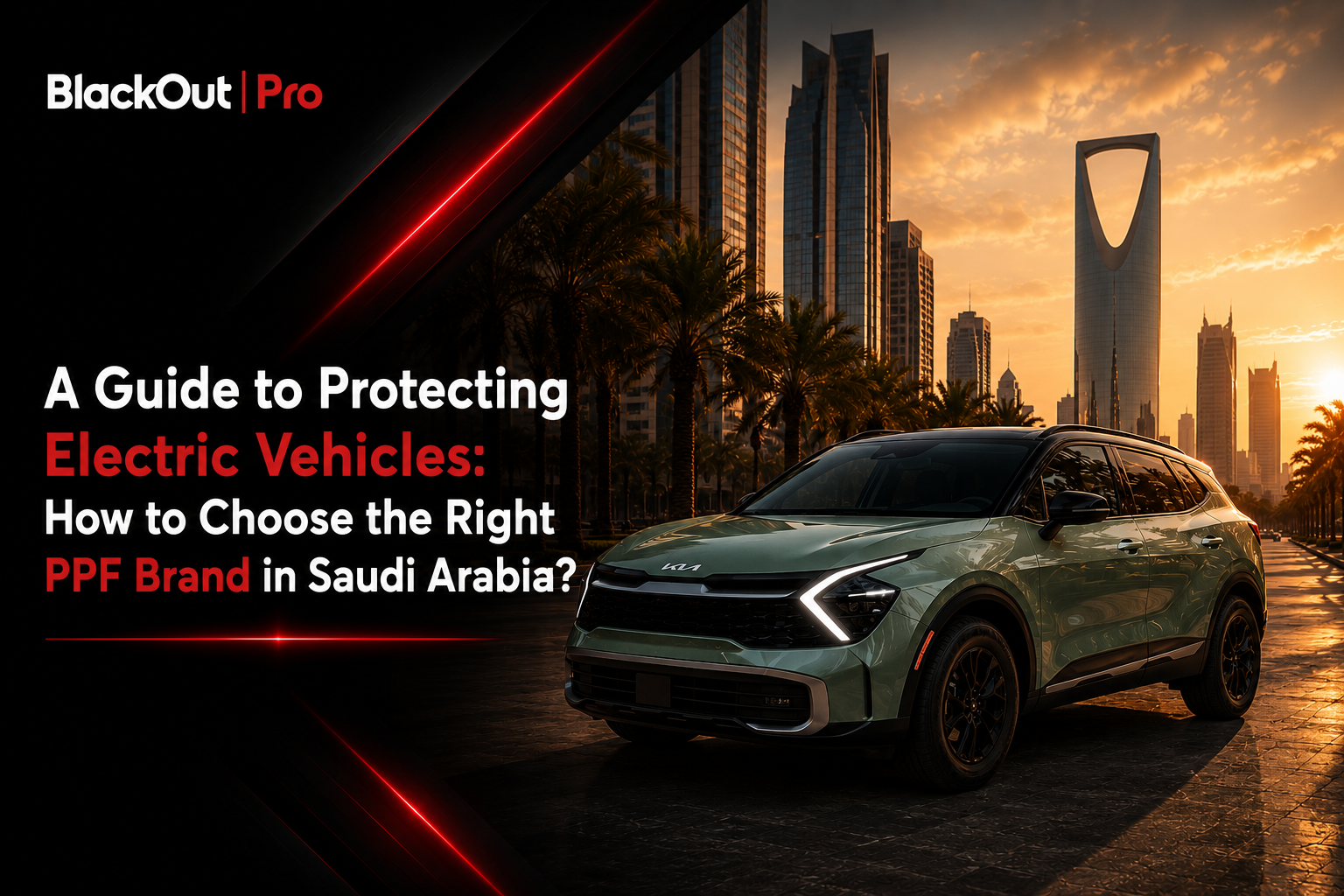
Are you struggling to choose a PPF brand that is compatible with your electric vehicle’s sensors and smart systems? This technical guide will help you protect your investment and preserve your vehicle’s paintwork with confidence.
If you have recently purchased your dream electric vehicle in Saudi Arabia, one of the first things on your mind is likely how to protect it from the harsh driving conditions found across the Kingdom. We're not just talking about everyday commuting; we're talking about prolonged exposure to intense sunlight, summer temperatures exceeding 50°C in Riyadh and the Eastern Province, and constant encounters with sand, dust, and road debris on highways such as Riyadh–Khobar Road, Al Hijrah Road, and Jeddah highways.
Owning a modern electric vehicle in Saudi Arabia—whether it's a Lucid Air, Tesla Model Y, Zeekr 001, or a luxury BYD Han—is more than embracing the future; it's an advanced driving experience powered by sophisticated computers, sensors, and expansive glass surfaces. However, when these advanced vehicles face the harsh Gulf climate, where temperatures soar above 50°C and sandstorms frequently sweep across highways, their radar systems, sensors, and premium paintwork become highly vulnerable.
Investing in Paint Protection Film (PPF) specifically designed for electric vehicles is one of the smartest decisions you can make to protect your vehicle’s intelligent systems, preserve its appearance, and maximize its resale value. However, with so many options available, choosing the right brand can be challenging.
Quick Summary: What Is the Best PPF Brand for Electric Vehicles?
Protecting electric vehicles requires selecting a PPF brand that meets strict technical standards while ensuring the safety of the vehicle's advanced systems in Saudi Arabia's demanding climate.
1. Full Compatibility with Radar and ADAS Systems
Choose premium PPF brands made from 100% pure TPU (Thermoplastic Polyurethane), such as STEK or XPEL. Their high molecular purity allows radar signals and cameras to function without interference, ensuring Tesla Autopilot and Lucid Driver Assistance Systems operate correctly. In contrast, PVC films may interfere with signals and can damage the original paint over time.
2. Self-Healing Technology
Ensure the film includes a crystal-clear top coat with self-healing capabilities. This allows minor scratches caused by dust, sand, or improper washing to disappear automatically when exposed to sunlight or heat.
3. Precision Digital Installation
Avoid hand-cutting methods entirely. Electric vehicles require computer-cut patterns using advanced plotter systems to eliminate the risk of blades coming into contact with sensors, wiring harnesses, or sensitive body panels. Always ensure a registered local warranty is provided.
Technical Criteria for Choosing the Right PPF for Electric Vehicles
Before focusing on the brand name or country of origin, consider the physical and chemical properties that determine whether a protection film can withstand Saudi Arabia's climate while preserving your vehicle’s advanced technology.
1. Base Material: Always Choose TPU and Avoid PVC
PPF products are generally divided into two primary categories:
Thermoplastic Polyurethane (TPU)
This is the premium material used by reputable manufacturers. TPU offers:
-
Exceptional flexibility
-
Superior yellowing resistance
-
Excellent impact absorption from gravel and road debris
-
Safe removal without leaving adhesive residue
-
Long-term protection for factory paint
Polyvinyl Chloride (PVC)
PVC is a low-cost plastic material that should be avoided. It:
-
Becomes brittle under UV exposure
-
Cracks over time
-
Yellows quickly
-
May pull off factory paint during removal
2. Self-Healing Properties
One of the most valuable features of premium PPF brands is self-healing technology.
When the film develops minor scratches caused by dusty microfiber towels, improper washing techniques, or light abrasion, the surface layer automatically reforms its molecular structure when exposed to sunlight or warm water, restoring the original finish.
3. Sensor and ADAS Protection
Electric vehicles rely heavily on radar systems and sensors hidden behind front and rear bumpers.
Premium TPU films are engineered with molecular clarity that allows radar frequencies and sensor signals to pass through without distortion. Inferior hybrid or commercial-grade films can trigger warning messages, cause inaccurate sensor readings, or even affect automatic emergency braking systems.
4. Thermal Management and Energy Efficiency
Large glass roofs and expansive body panels allow significant amounts of infrared radiation to enter the cabin, increasing interior temperatures and forcing the vehicle’s cooling systems to work harder—even while parked.
This increases battery consumption and reduces driving range.
Combining premium PPF with high-performance nano ceramic window tint helps reduce cabin temperatures, improve energy efficiency, and maximize battery performance during Saudi Arabia's extreme summers.
Comparison Table: PPF Brands and Their Compatibility with Electric Vehicles
| Comparison Factor |
Premium TPU Brands |
Mid-Range TPU Brands |
Commercial / Unknown Brands (PVC or Hybrid) |
| Popular Examples |
STEK Shield, XPEL Ultimate Plus, SunTek Ultra |
Madico, Hexis, Avery |
Generic films marketed as "economical American films" |
| EV Radar & Sensor Compatibility |
100% compatible with cameras and autonomous systems |
Generally good but requires precise installation |
High risk of signal interference and ADAS malfunctions |
| Material Quality |
100% chemically enhanced TPU |
Standard TPU blends |
PVC or low-grade hybrid materials |
| Resistance to Yellowing & Sand Damage |
7–10 years with UV protection |
3–5 years |
Yellowing within 6–12 months |
| Safe Removal |
Removes cleanly without affecting paint |
Usually safe with minor residue |
High risk of paint damage during removal |
| Average Saudi Price |
SAR 7,000–14,000 |
SAR 4,000–6,500 |
SAR 1,500–2,500 |
Common Mistakes When Choosing PPF for Electric Vehicles
At BlackOut Pro, we regularly see customers fall victim to marketing traps due to a lack of technical knowledge.
Focusing Only on Country of Origin
The phrase "American Film" has become a generic marketing term. Some films manufactured in the United States are budget products, while others are engineered specifically for harsh Gulf climates.
Always research the brand itself and its reputation within the Saudi market.
Ignoring Installation Quality
Even the world's best PPF brand can deliver poor results if installed by untrained technicians in dusty environments.
Poor installation can lead to:
-
Air bubbles
-
Dust contamination beneath the film
-
Improper blade cutting
-
Damage to sensors and body panels
Being Tempted by Extremely Low Prices
Pure TPU films have a high manufacturing cost worldwide.
If a center offers full-vehicle protection at suspiciously low prices, they are likely using PVC-based materials or outdated manual-cutting techniques that may harm your vehicle’s smart systems.

Do Different Electric Vehicles Require Different Protection Solutions?
Absolutely.
Each EV manufacturer uses unique sensor layouts and camera configurations.
Tesla Model 3 & Model Y
Tesla vehicles feature low, aerodynamic front ends without traditional grilles, making them highly vulnerable to stone chips and sand abrasion during highway driving.
A full-front TPU protection package is strongly recommended.
Lucid Air
The Lucid Air features an expansive Glass Canopy roof.
For optimal protection, exterior PPF should be combined with premium nano ceramic tinting to reduce heat buildup and minimize air-conditioning load.
Zeekr and BYD Premium EVs
These vehicles incorporate advanced ADAS technologies that depend heavily on cameras and radar systems integrated into bumpers and body panels.
Using low-quality protection films may immediately affect sensor accuracy and autonomous safety functions.
Dark-Colored Vehicles
Black and dark-colored vehicles benefit greatly from PPF films featuring advanced top-coat technology, which helps prevent visible swirl marks and maintains a deep, glossy finish.
To learn more, read our guide on genuine PPF.
Frequently Asked Questions (FAQ)
How Can I Verify That My PPF Is Genuine and Compatible with My EV?
Authorized installation centers provide digital verification systems.
At BlackOut Pro, every installation includes:
-
A registered local warranty
-
Vehicle-specific coverage linked to the VIN and license plate
-
International serial number verification for brands such as STEK and XPEL
-
Digital cutting software updated for 2026 vehicle models, including the latest EV and Chinese luxury vehicle platforms
Does Premium PPF Require Regular Maintenance?
Yes.
Saudi Arabia’s environment—particularly in Riyadh and the Eastern Province—contains fine dust particles that continuously accumulate on vehicle surfaces.
For optimal performance, vehicles should undergo professional maintenance every 4–6 months to:
-
Deep-clean the film
-
Restore hydrophobic properties
-
Maintain maximum gloss and protection
I Own a Matte-Finish Vehicle. Is There a Suitable PPF Option?
Absolutely.
Leading manufacturers offer:
-
Gloss PPF for standard paint finishes
-
Matte PPF specifically designed for satin and matte paint
Matte PPF protects delicate factory finishes while preserving the original appearance without altering color or texture.
Does PPF Protect the Vehicle Roof?
Yes.
PPF protects against:
-
Bird droppings
-
Tree sap
-
UV damage
-
Environmental contaminants
For vehicles equipped with panoramic glass roofs, combining exterior protection with premium nano ceramic tinting provides complete thermal and UV protection.
Protect Your Electric Vehicle the Smart Way with BlackOut Pro
Protecting luxury and electric vehicles in Saudi Arabia goes far beyond preserving paintwork. It requires a comprehensive understanding of sensitive sensors, radar systems, advanced electronics, and large glass surfaces.
At BlackOut Pro, we provide state-of-the-art digital protection solutions using computer-controlled plotter cutting technology that completely eliminates the need for manual blade cutting. We exclusively use world-class TPU films fully compatible with modern radar systems, cameras, and autonomous driving technologies.
To complete the protection package, our specialists combine premium PPF installation with advanced thermal window tinting solutions to reduce heat buildup, improve comfort, and maximize battery efficiency.
Don't let your electric vehicle become a testing ground for low-quality commercial products.
Contact BlackOut Pro via WhatsApp today and tell us about your EV model. Our specialists will schedule a complimentary inspection of your vehicle’s paintwork and systems and recommend the ideal protection package tailored to your needs.
💬 Contact a BlackOut Pro Vehicle Protection Specialist on WhatsApp Today