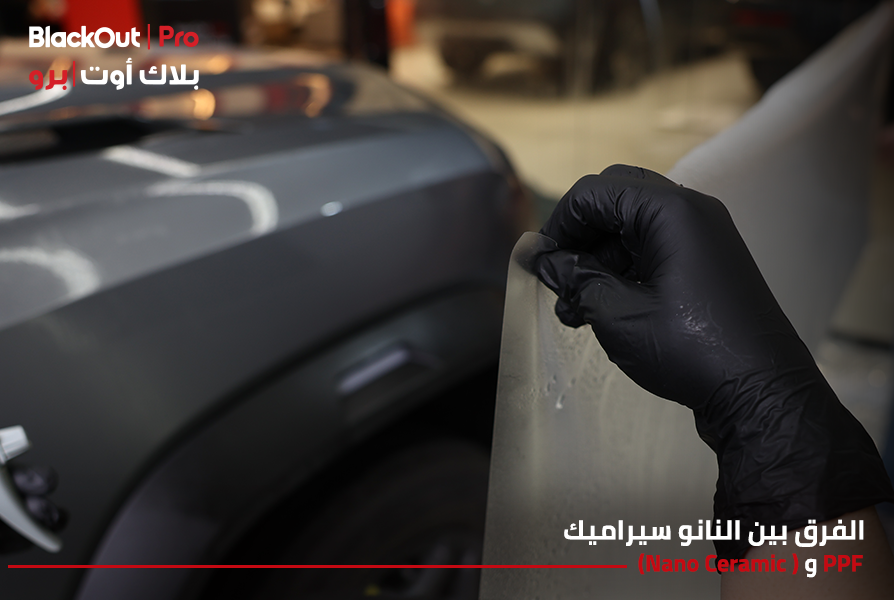
Many people often confuse Paint Protection Film (PPF) with Nano Ceramic technology. They struggle to identify the key differences between them: What are the advantages of each? What does Nano protection offer? And how can one choose the ideal option for their vehicle and specific needs? In this article, you will find everything you need to know about both technologies.

First: What is PPF and What are its Benefits?
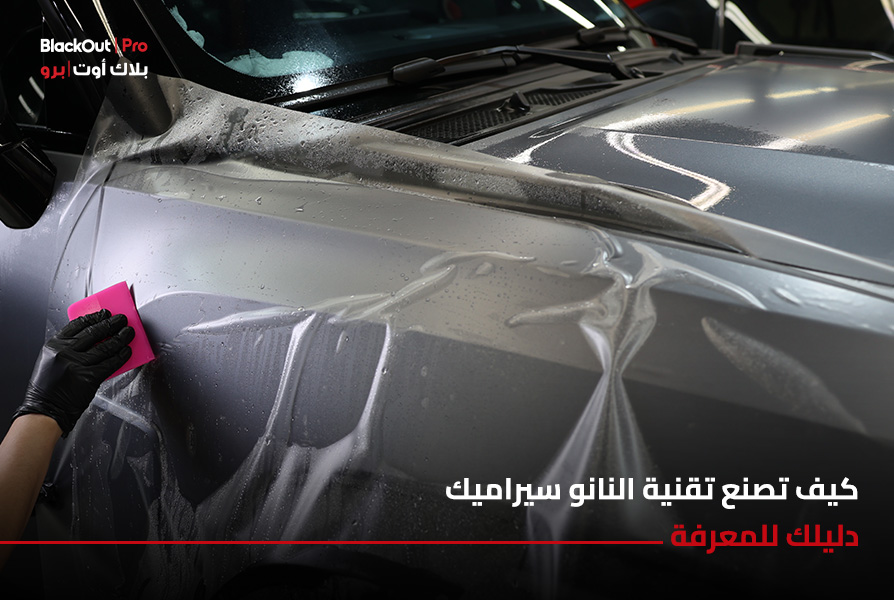
PPF stands for Paint Protection Film. It is a transparent or colored layer applied to the vehicle's exterior and bonded with a specialized adhesive. It acts as a shield, isolating the original paint from harsh environmental factors and harmful UV rays.
The benefits of PPF include:
- Impact & Scratch Protection: PPF absorbs shocks and effectively guards against abrasions.
- UV Shielding: It blocks harmful solar rays that contribute to vehicle overheating.
- Preserving Luster: It prevents the original paint from fading, erosion, or deterioration.
- Ease of Cleaning: The film prevents dirt accumulation, making the car much easier to wash.
- Chemical & Acid Rain Resistance: It stands up well against environmental pollutants.
- Value Preservation: It maintains the car's market value for future resale.

Second: What is Nano Ceramic and What are its Benefits?
Nano Ceramic is a liquid chemical coating consisting of microscopic nanoparticles. When applied to the car's surface, these particles bond chemically with the original paint to create a reinforced protective layer against harsh weather and UV rays.
The benefits of Nano Ceramic include:
- Minor Scratch Protection: It provides a hard layer that resists light surface scratches.
- Hydrophobic Properties: It repels water, dirt, chemical stains, and dust.
- Fade Prevention: It protects the original paint color from oxidation and fading.
- Deep Gloss Finish: Nano Ceramic provides a long-lasting, brilliant shine.
- Heat Insulation: It helps dissipate heat and block harmful rays.
- Corrosion Resistance: The technology offers significant protection against rust.

The Core Differences: Nano Ceramic vs. PPF
When looking for the best car protection, several key differences emerge between these two popular methods:
- Lifespan: Nano Ceramic typically lasts between 2 to 5 years, provided high-quality materials are used and professional maintenance is performed. In contrast, PPF lasts much longer, ranging from 5 to 10 years, thanks to its "Self-Healing" properties that repair minor scratches when exposed to heat (sunlight or warm water).
- Level of Protection: While Nano Ceramic excels at repelling water and enhancing shine, PPF is superior at protecting against physical damage, absorbing impacts from road debris and gravel.
- Thickness: Nano Ceramic is nearly invisible in terms of thickness as it blends with the paint's pores. PPF is a separate, thicker physical layer that is more noticeable upon close inspection.
- Cost: Generally, PPF has a higher initial cost compared to Nano Ceramic due to the material and specialized installation process.

To learn more, read our guide on types of paint protection film.
To learn more, read our guide on nano ceramic for cars.
To learn more, read our guide on benefits of paint protection film.
To learn more, read our guide on protect car paint.
Conclusion
Now that you can easily distinguish between Nano Ceramic and PPF, you can make an informed decision based on your budget and protection needs. Don't let your car go unprotected—choose the best for its future.