Quick Answer
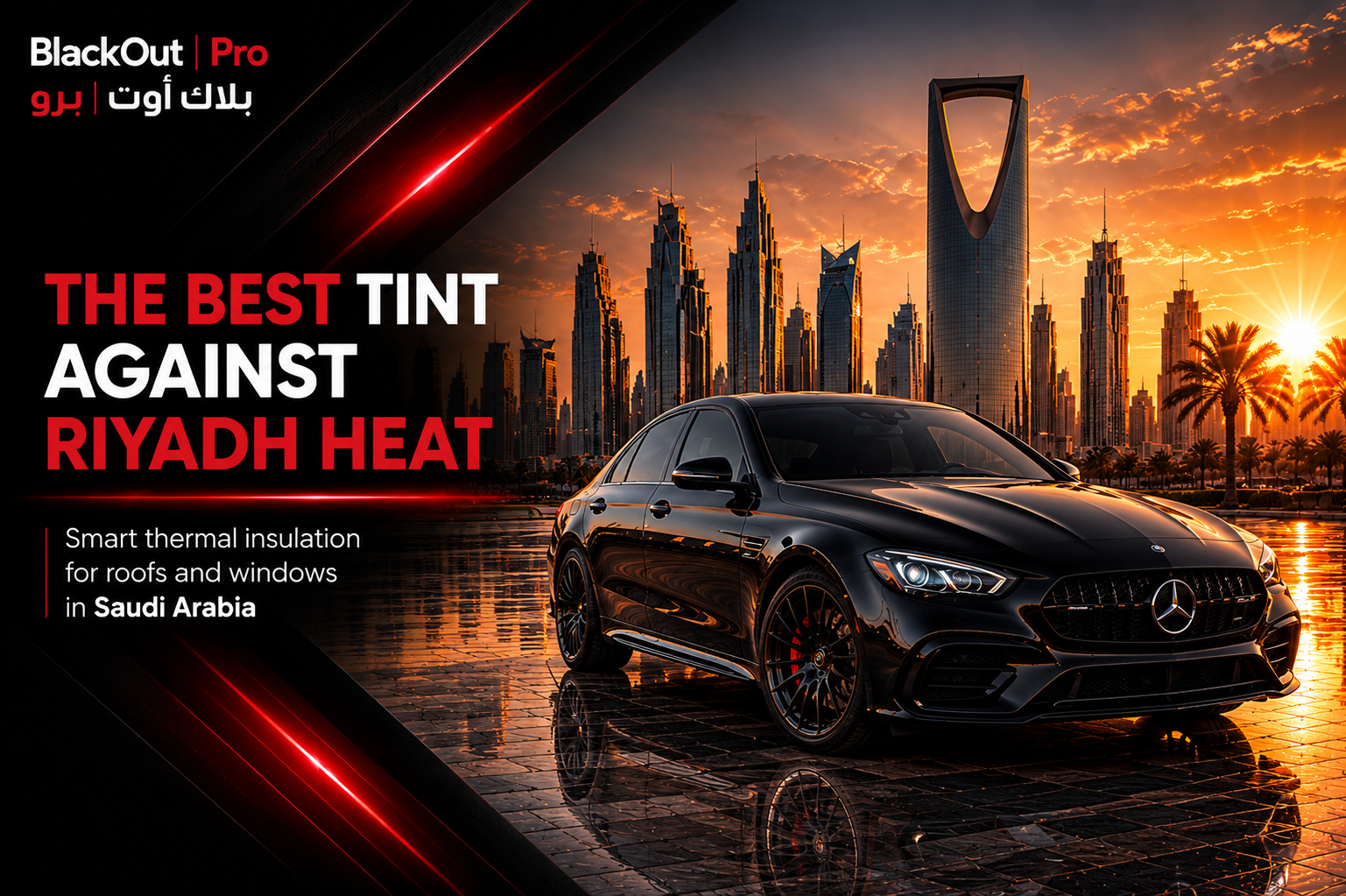
The best window tint against Riyadh's heat is high-quality, non-metallic nano-ceramic. It reduces the penetration of infrared (IR) rays into the cabin and minimizes heat buildup inside the car compared to traditional tinting. The best result is usually achieved with a transparent or semi-transparent film (70%–80%) featuring high Total Solar Energy Rejection (TSER).
Why is Riyadh's Heat a Different Challenge for Cars?
Driving in Riyadh at noon means exposing the vehicle to extreme temperatures, especially for:
-
Vehicles with large glass areas (SUVs / Panorama roofs)
-
Cars with leather seats
-
Vehicles parked under the sun for extended periods
The problem is not just feeling the heat, but also:
-
High surface temperatures of interior components
-
Increased load on the air conditioning (AC) system
-
Difficulty cooling down the cabin quickly upon starting the car
What is the Best Type of Tint Against Riyadh's Heat?
The best practical choice: Non-metallic Nano-Ceramic
This type is considered the most balanced for Riyadh's climate because it:
-
Significantly reduces infrared (IR) rays
-
Enhances cabin comfort while parked and driving
-
Does not interfere with GPS or smart car systems
-
Is highly suitable for luxury and electric vehicles (EVs)
Important Note: Actual performance varies based on the film's quality and insulation metrics, not just its shade or color.

How to Choose the Right Tint?
Choose based on your usage:
-
Comfort + Premium look around the city:
$\rightarrow$ Transparent nano-ceramic 70%–80%
-
Extreme heat + Daily commuting in Riyadh:
$\rightarrow$ High-insulation ceramic (High TSER + Strong IR rejection)
-
Electric Vehicle (Tesla / Lucid):
$\rightarrow$ Essential requirement: 100% Non-metallic
-
Road trips and long-distance driving:
$\rightarrow$ Multi-layer Ceramic for consistent performance under intense sunlight
Quick Comparison Between Window Tint Types
| Tint Type |
Thermal Performance |
Clarity / Transparency |
Impact on Systems |
Notes |
| Nano-Ceramic |
Very High |
Excellent |
No Interference |
Best for Riyadh |
| Carbon |
Medium to Good |
Medium |
Safe |
Gives a darker shade |
| Metallic |
Good Thermally |
Reflective |
May Weaken Signals |
Not preferred for modern cars |
| Dyed |
Poor |
Poor |
No Interference |
Unsuitable for extreme heat |
Do All Cars Need the Same Tint?
No, because design and usage vary:
-
Large SUVs require stronger insulation due to the extensive glass surface area.
-
Black cars absorb more heat and need higher thermal performance.
-
Electric vehicles require minimizing the workload on the AC.
-
Panoramic cars need specialized insulation for the glass roof.
-
City driving demands differ from long highway road trips.
Does Window Tint Really Reduce Car Temperature?
Yes, but in a gradual and realistic manner. A high-quality tint helps:
-
Reduce the penetration of heat-inducing rays
-
Decrease the time needed to cool down the cabin
-
Minimize strain on the AC during operation
Electric Vehicles (EVs) and Window Tint
In electric cars:
-
Interior heat directly impacts energy consumption.
-
The system may automatically activate cabin cooling while parked.
-
Reducing heat helps prevent the AC from running continuously.
Result: An indirect improvement in driving range and energy efficiency.
Common Mistakes When Choosing Window Tint
-
Believing that "darker color = better cooling."
-
Using cheap metallic films.
-
Selecting an excessively dark shade that impairs night visibility.
-
Ignoring the car's original glass type and factory specifications.
Frequently Asked Questions (FAQ)
Does clear/transparent tint reduce heat?
Yes, because heat rejection depends on blocking infrared rays, not the shade or darkness of the film.
Does it affect GPS or mobile phone signals?
No, as long as the film is non-metallic.
Does Riyadh's heat require a very powerful tint?
Yes, because direct solar exposure is prolonged and intense throughout most of the year.
Does window tint reduce gasoline or electricity consumption?
Indirectly, by reducing the workload and strain on the air conditioner.
Who Needs This Type of Tint?
-
Luxury car owners in Riyadh
-
Drivers of large SUVs
-
Electric vehicle (EV) owners
-
Anyone who parks their car under the sun for long periods
-
Families who prioritize rear-passenger comfort
To learn more, read our guide on permitted tint.
To learn more, read our guide on Land Cruiser.
Summary of the Decision
If you are looking for the best window tint against Riyadh's heat, the practical choice is:
Non-metallic nano-ceramic + Balanced transparency + High thermal performance
This option achieves the perfect balance between:
-
Cabin comfort
-
Interior protection
-
Zero interference with smart systems
-
Compliance with Riyadh's driving conditions
Pre-Installation Consultation
Choosing the right tint does not rely solely on the product type, but rather on: Vehicle type + Glass surface area + Daily usage patterns.
Instead of relying on a generic recommendation, you can request a thermal evaluation for your specific vehicle to determine the most suitable option before installation.
BlackOut Pro